Oxygen Cylinder Price in Bangladesh: Sizes, Types, Rent & Buying Guide
Oxygen Cylinder Price in Bangladesh: Sizes, Types, Rent & Buying Guide
Choosing the right oxygen cylinder is not simply about finding the biggest or cheapest gas bottle available. The correct oxygen cylinder size depends on how much oxygen you need, where you plan to use it, how frequently it will be used, and whether it is intended for medical, hospital, welding, or industrial applications.
For home oxygen therapy, portability and usable oxygen capacity matter. For hospitals, a larger medical cylinder may be more practical because it can support longer use between refills. Industrial users may have completely different requirements because industrial oxygen is often selected according to the application, equipment, and operating environment.
At Oxygen Hub BD, we understand that comparing medical gas cylinders can feel confusing. Terms such as cylinder capacity, water capacity, compressed oxygen, regulator, portable oxygen, and pressure can make a simple buying decision seem complicated.
That’s why this guide breaks everything down in straightforward language. Whether you are searching for an oxygen cylinder for home use, a portable cylinder, a medical cylinder, or information about oxygen cylinder price in Bangladesh, you will find the key information you need here.
What Is an Oxygen Cylinder?
An oxygen cylinder is a specially manufactured pressure vessel designed to store oxygen in compressed form. Unlike ordinary gas bottles, oxygen cylinders are built to withstand high internal pressure and are used with compatible valves, regulators, and delivery equipment.
A medical oxygen cylinder is generally used to provide supplemental oxygen to patients who require oxygen therapy. Hospitals, clinics, ambulances, nursing facilities, and households may use these cylinders when prescribed or recommended by a qualified healthcare professional.
Oxygen cylinders can also be used in industrial environments. However, medical and industrial oxygen systems should not automatically be treated as interchangeable. The purity, certification, filling process, equipment compatibility, and intended application can differ.
Think of an oxygen cylinder as a rechargeable storage tank. The cylinder stores compressed oxygen, while the regulator controls how that oxygen leaves the cylinder. The cylinder provides the supply, and the regulator helps make that supply usable.
Why Oxygen Cylinder Size Matters
The oxygen cylinder size directly affects how much oxygen can be stored and how long the supply may last under a particular flow rate.
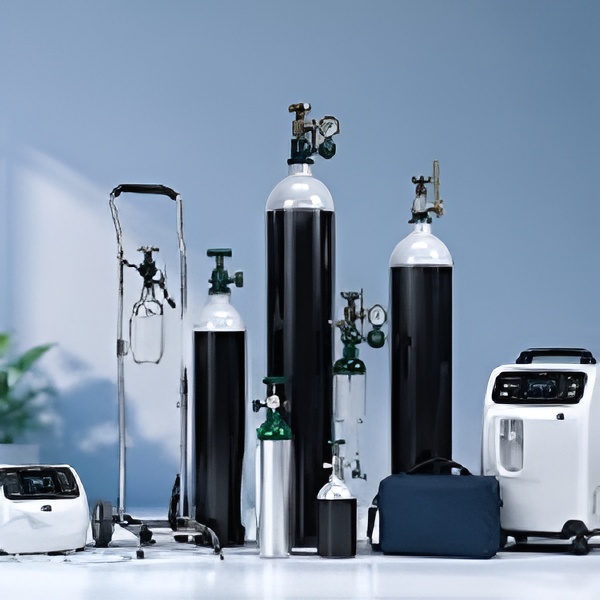
A small cylinder can be convenient to carry, but its oxygen capacity is limited. A larger cylinder can provide a longer supply but may be heavier and less convenient to transport.
This creates a simple trade-off:
- The smaller cylinders offer better portability.
- Medium cylinders balance portability and capacity.
- Large cylinders provide greater oxygen storage.
- Hospital cylinders are designed for frequent or high-demand use.
- Portable oxygen cylinders are useful when mobility is important.
However, cylinder dimensions alone do not tell you how long the oxygen will last. Actual duration depends on pressure, cylinder capacity, oxygen flow rate, and the amount of usable oxygen remaining.
Oxygen Cylinder Size vs Oxygen Capacity
One common mistake is assuming that physical size and oxygen capacity mean exactly the same thing.
They are related, but they are not identical.
A cylinder may be described by its physical dimensions, water capacity, or gas capacity. When comparing products, you should check the manufacturer’s specifications instead of relying only on labels such as small, medium, or large.
For example, two cylinders that look similar may have different specifications because of their construction, rated pressure, valve design, or internal volume.
That is why a proper oxygen cylinder capacity chart can be more useful than a simple size comparison.
Oxygen Cylinder Types
There is no single cylinder that is perfect for every situation. Different oxygen cylinder types exist because users have different requirements.
Medical Oxygen Cylinder
A medical oxygen cylinder is designed for oxygen therapy and healthcare applications. It may be used in hospitals, clinics, ambulances, and homes when supplemental oxygen is required.
The main priorities for a medical cylinder are safety, appropriate certification, compatibility with medical oxygen equipment, and dependable gas supply.
If you are buying an oxygen cylinder for home use, make sure you know whether the cylinder is intended for medical oxygen and whether the included accessories are compatible with your setup.
Portable Oxygen Cylinder
A portable oxygen cylinder is generally smaller and easier to transport than a large hospital cylinder.
It can be useful for patients who need oxygen while moving between rooms, traveling to appointments, or using oxygen away from a fixed location. The actual suitability depends on the patient’s prescribed oxygen requirement and the cylinder’s capacity.
Portability is valuable, but it should never be considered more important than having an adequate oxygen supply.
Small Oxygen Cylinder
A small oxygen cylinder is often selected when portability is the primary concern.
It can be easier to handle, store, and transport. However, a smaller cylinder naturally has less storage capacity than a larger model under comparable conditions.
Small cylinders may therefore be suitable for short-duration use or situations where mobility is important.
Medium Oxygen Cylinder
A medium oxygen cylinder offers a compromise between portability and capacity.
For some users, this is the sweet spot. It provides more oxygen than a mini cylinder while remaining easier to manage than a very large cylinder.
Before selecting a medium model, compare its capacity, pressure rating, weight, dimensions, and regulator compatibility.
Hospital Oxygen Cylinder
Hospital oxygen cylinders are generally selected for healthcare environments where oxygen demand can be continuous or substantial.
Hospitals may maintain multiple cylinders so that filled cylinders can replace depleted ones without interrupting oxygen availability.
A hospital cylinder may not be the best choice for a household simply because it holds more oxygen. Weight, storage space, transportation, and practical handling all matter.
Industrial Oxygen Cylinder
Industrial oxygen cylinders are intended for industrial applications and may be used in processes such as metal cutting, fabrication, and other specialized operations.
Industrial oxygen should not be selected for medical oxygen therapy merely because both products contain oxygen. The intended application and applicable standards are important.
Welding Oxygen Cylinder
Oxygen is used in certain welding and cutting processes, particularly with compatible fuel gases and equipment.
If your requirements are related to welding, fabrication, or metal cutting, select equipment specifically intended for that application. Never assume that a cylinder marketed for industrial use is automatically appropriate for medical oxygen therapy.
Understanding Oxygen Cylinder Capacity
Oxygen cylinder capacity tells you how much compressed oxygen the cylinder can hold under specified conditions.
Manufacturers may describe capacity in different ways, so it is important to understand the terminology.
You may see terms such as:
- Water capacity
- Gas capacity
- Cylinder volume
- Working pressure
- Filled with pressure
- Oxygen capacity
- Rated pressure
These specifications should be considered together.
A cylinder with a larger internal volume can generally hold more compressed gas at the same pressure. However, pressure and filling specifications also influence the amount of gas available.
What Does Cylinder Water Capacity Mean?
Water capacity refers to the internal volume of the cylinder expressed as the amount of water it could physically contain.
It does not mean that the cylinder is filled with water during normal oxygen use.
For example, a cylinder may have a stated water capacity measured in litres while its actual compressed oxygen content is much greater when expressed under standard gas conditions.
This is one reason why consumers should not compare cylinders based on a single number without understanding what that number represents.
Oxygen Cylinder Capacity in Liters
Searching for oxygen cylinder capacity in liters is common because buyers want to know how much oxygen they are getting.
The answer depends on the cylinder’s internal volume and filling pressure. A larger internal volume and higher permissible pressure generally allow greater compressed gas storage.
However, the amount of oxygen delivered to a patient also depends on the flow rate.
For example, oxygen supplied at a low flow rate will generally last longer than the same cylinder supplying oxygen at a high flow rate.
A Simple Oxygen Duration Concept
A simplified calculation can help explain the concept:
Approximate oxygen duration = usable oxygen volume ÷ flow rate
This is only a conceptual formula. Real-world duration can vary because of pressure, residual gas, regulator characteristics, cylinder specifications, temperature, and other factors.
For medical use, follow the prescribed flow rate and do not adjust oxygen therapy based solely on an online calculation.
Oxygen Cylinder Size Comparison Chart
A practical comparison can make choosing an oxygen cylinder size easier.
| Cylinder category | Main advantage | Typical considerations |
|---|---|---|
| Mini | Very portable | Limited capacity |
| Small | Easy to transport | Shorter operating duration |
| Medium | Balanced option | Moderate weight and capacity |
| Large | Greater oxygen storage | Heavier and less portable |
| Hospital | High-demand environments | Designed for frequent clinical use |
| Industrial | Industrial applications | Not automatically suitable for medical therapy |
The exact dimensions, pressure, capacity, and weight vary by manufacturer and model. Always check the product specifications before purchasing.
How an Oxygen Cylinder Works
The operating principle is relatively simple.
Compressed oxygen is stored inside the cylinder. When the cylinder valve is opened, oxygen moves toward the regulator. The regulator reduces and controls the pressure before oxygen reaches the delivery device.
Depending on the system, oxygen may then travel through tubing to a nasal cannula, oxygen mask, or other compatible equipment.
The Role of the Regulator
The regulator is one of the most important components of an oxygen setup.
Cylinder pressure can be far higher than the pressure appropriate for direct delivery. A regulator helps reduce and control the pressure to a usable level.
Some regulators also include flow controls and pressure gauges. The gauge can help indicate the remaining cylinder pressure, while the flow control determines the rate at which oxygen is supplied.
Always use a regulator designed and approved for the specific cylinder and application.
Oxygen Cylinder for Home Use
When choosing an oxygen cylinder for home use, convenience and safety should be considered together.
A home user may naturally prefer a small portable cylinder because it is easier to move. But if oxygen is needed for extended periods, a larger capacity may be more practical.
Ask yourself:
- How frequently will the cylinder be used?
- What oxygen flow rate has been prescribed?
- How often can the cylinder be refilled?
- Does the home have enough storage space?
- Who will handle and transport the cylinder?
- Is the regulator compatible?
- Is the cylinder intended for medical oxygen?
The best cylinder is not necessarily the largest one. It is the one that safely meets the actual requirement.
Benefits of Choosing the Right Oxygen Cylinder Size
Selecting the appropriate oxygen cylinder size can provide several practical advantages.
- Better portability: Smaller cylinders are easier to move.
- Longer supply: Larger cylinders can provide more stored oxygen.
- Convenient home use: The right cylinder can fit your available space.
- Reduced refill interruptions: Higher-capacity cylinders may require fewer refills.
- Improved mobility: Portable cylinders can support movement outside the home.
- Efficient equipment selection: Choosing the correct size helps match the regulator and accessories.
- Improved planning: Knowing the capacity makes oxygen supply management easier.
- Cost awareness: Knowing the right capacity can help avoid paying for a cylinder that is unnecessarily large.
Pros and Cons of Different Oxygen Cylinder Sizes
Every size has advantages and limitations.
Small Cylinders
Pros:
- Lightweight compared to larger models
- Easy to transport
- Requires less storage space
- Convenient for short-duration requirements
Cons:
- Lower oxygen capacity
- May require more frequent refilling
- Less suitable for long-duration, high-flow use
Medium Cylinders
Pros:
- Good balance between capacity and portability
- Suitable for many practical situations
- More capacity than compact cylinders
Cons:
- Heavier than small cylinders
- May still require regular refilling for continuous use
Large Cylinders
Pros:
- Higher oxygen capacity
- Better suited to longer-duration requirements
- Fewer refill interruptions
Cons:
- Heavy
- More difficult to transport
- Requires more storage space
Oxygen Cylinder Price in Bangladesh
Many buyers search for oxygen cylinder price in Bangladesh before deciding which model to purchase or rent.
However, there is no single universal price because the cost depends on several factors, including cylinder size, capacity, material, pressure rating, valve type, regulator, accessories, brand, and whether you are purchasing or renting.
A complete oxygen cylinder set can cost more than the cylinder alone because it may include a regulator, flowmeter, tubing, mask, or other accessories.
For this reason, comparing the total package is often more useful than comparing only the cylinder price.
At Oxygen Hub BD, buyers can evaluate their requirements before choosing a suitable oxygen cylinder configuration.
| S.L | Product name | Price |
| 1 | Islam Oxygen Cylinder | 9,500.00৳ |
| 2 | Linde Oxygen Cylinder | 16,000.00৳ |
| 3 | 2000 ltr Oxygen Cylinder | 9,200.00৳ |
| 4 | Portable Oxygen Cylinder | 9,500.00৳ |
| 5 | Mini Oxygen Cylinder | 9,300.00৳ |
| 6 | Traveling Portable Oxygen | 15,000.00৳ |
Buying vs Renting an Oxygen Cylinder
Should you buy an oxygen cylinder or rent one?
The answer depends largely on how long you expect to need it.
Buying
Buying may make sense when:
- Oxygen is required for a longer period.
- You want a cylinder available whenever it’s needed.
- You expect repeated use.
- You want to avoid repeated rental arrangements.
Renting
Renting may be practical when:
- The oxygen requirement is temporary.
- You only need a cylinder for a short period.
- You want to reduce the initial expense.
- You do not want to manage long-term cylinder ownership.
Always compare rental terms, refill arrangements, deposit requirements, maintenance responsibilities, and delivery options before deciding.
How to Choose the Best Oxygen Cylinder Size
There is no universal answer to the question, “Which oxygen cylinder size should I buy?”
Instead, use a requirements-first approach.
For Short-Term or Portable Requirements
A smaller portable oxygen cylinder may be appropriate when ease of transportation is important and the required duration is relatively short.
For Regular Home Oxygen Use
A medium or larger medical cylinder may be more practical if oxygen is required frequently or for extended periods.
For Hospitals
Hospitals generally need cylinders capable of supporting regular clinical use and maintaining an adequate backup supply.
For Industrial Applications
Industrial requirements should be evaluated according to the specific equipment, process, oxygen demand, and safety requirements.
Important Safety Considerations
Oxygen supports combustion. Although oxygen itself is not a fuel, it can make fires burn much more intensely.
For that reason, oxygen cylinders should be handled carefully.
Follow These Basic Safety Rules
- Keep oxygen cylinders away from flames and smoking materials.
- Store cylinders in a stable, secure position.
- Keep valves and connections clean.
- Do not use oil or grease on oxygen equipment unless specifically approved.
- Do not attempt to repair damaged valves yourself.
- Use compatible regulators and accessories.
- Keep cylinders away from excessive heat.
- Check for leaks and damaged equipment.
- Follow the manufacturer’s storage and handling instructions.
- For medical oxygen, follow the healthcare professional’s prescribed flow rate.
Never treat an oxygen cylinder like an ordinary household gas bottle. It is a high-pressure medical or industrial gas system and deserves appropriate care.
Common Mistakes When Buying an Oxygen Cylinder
A few simple mistakes can create unnecessary expense or safety problems.
Choosing Based Only on Price
The cheapest cylinder is not necessarily the best value. Quality, certification, capacity, regulator compatibility, and after-sales support matter.
Ignoring the Regulator
A cylinder without a suitable regulator may not be ready for practical use. Always verify what is included in the package.
Confusing Cylinder Size With Oxygen Duration
A physically large cylinder does not automatically tell you how long it will last. Flow rate and pressure are also important.
Buying the Wrong Type
Medical, industrial, and welding applications have different requirements. Always choose equipment for its intended use.
Ignoring Portability
A very large cylinder may provide plenty of oxygen, but moving it can be difficult. Think about where the cylinder will be used.
Why Buy From Oxygen Hub BD?
When purchasing medical equipment, product availability is only one part of the decision. Buyers also need clear information, suitable accessories, dependable product support, and guidance on choosing the right configuration.
Oxygen Hub BD focuses on medical and healthcare equipment for customers in Bangladesh. If you are comparing an oxygen cylinder for home use, a portable oxygen cylinder, or a complete medical oxygen cylinder set, understanding the specifications before ordering can help you make a more confident decision.
Instead of just asking, “What is the cheapest oxygen cylinder?”, ask a better question: “Which cylinder safely matches my actual requirement?”
That small change in thinking can make a significant difference.
Frequently Asked Questions About Oxygen Cylinder Size
1. What is the best oxygen cylinder size for home use?
The best oxygen cylinder size for home use depends on the prescribed oxygen flow rate, expected duration of use, portability needs, available storage space, and refill access. A healthcare professional should determine the oxygen requirement, while the user can select a practical cylinder capacity around that requirement.
2. What are the common oxygen cylinder types?
Common oxygen cylinder types include medical oxygen cylinders, portable oxygen cylinders, hospital oxygen cylinders, industrial oxygen cylinders, and cylinders used for welding or cutting applications. The appropriate type depends on the intended use.
3. Does a bigger oxygen cylinder last longer?
Generally, a cylinder with greater usable oxygen capacity can last longer under the same flow conditions. However, the actual duration depends on pressure, capacity, flow rate, and the amount of oxygen available in the cylinder.
4. What is the oxygen cylinder capacity?
Oxygen cylinder capacity refers to the amount of compressed oxygen that can be stored under specified conditions. Manufacturers may provide water capacity, gas capacity, working pressure, or other specifications, so buyers should check the complete product specification.
5. Can I use an industrial oxygen cylinder for medical oxygen therapy?
Do not assume that an industrial oxygen cylinder is suitable for medical oxygen therapy. Medical applications require appropriate oxygen, equipment, certification, cleanliness, and compatibility. Use equipment specifically intended for medical applications.
Conclusion
Choosing the right oxygen cylinder size becomes much easier when you stop thinking only in terms of physical dimensions and start thinking about actual oxygen requirements. Small cylinders offer portability, medium cylinders provide a useful balance, and larger cylinders offer greater storage capacity. Medical, hospital, portable, industrial, and welding cylinders also serve different purposes and should be selected accordingly.
If you are looking for an oxygen cylinder for home use, start with the required oxygen flow rate and expected duration. Then consider capacity, portability, regulator compatibility, storage, refill availability, and overall cost. For medical oxygen therapy, always follow professional medical guidance rather than changing oxygen flow on your own.
Whether you are comparing oxygen cylinder prices in Bangladesh, oxygen cylinder capacity, portable oxygen options, or medical gas cylinders, the smartest purchase is the one that safely matches your needs.
As a reliable medical equipment and oxygen cylinder supplier in Bangladesh, Oxygen Hub BD can help you evaluate the right product configuration before making your purchase.
Below is a complete SEO and AEO-focused article designed for an e-commerce blog for Oxygen Hub BD. It targets the primary keyword “oxygen cylinder size” while naturally covering cylinder types, capacity, medical and industrial applications, portability, regulators, buying considerations, and related search terms.