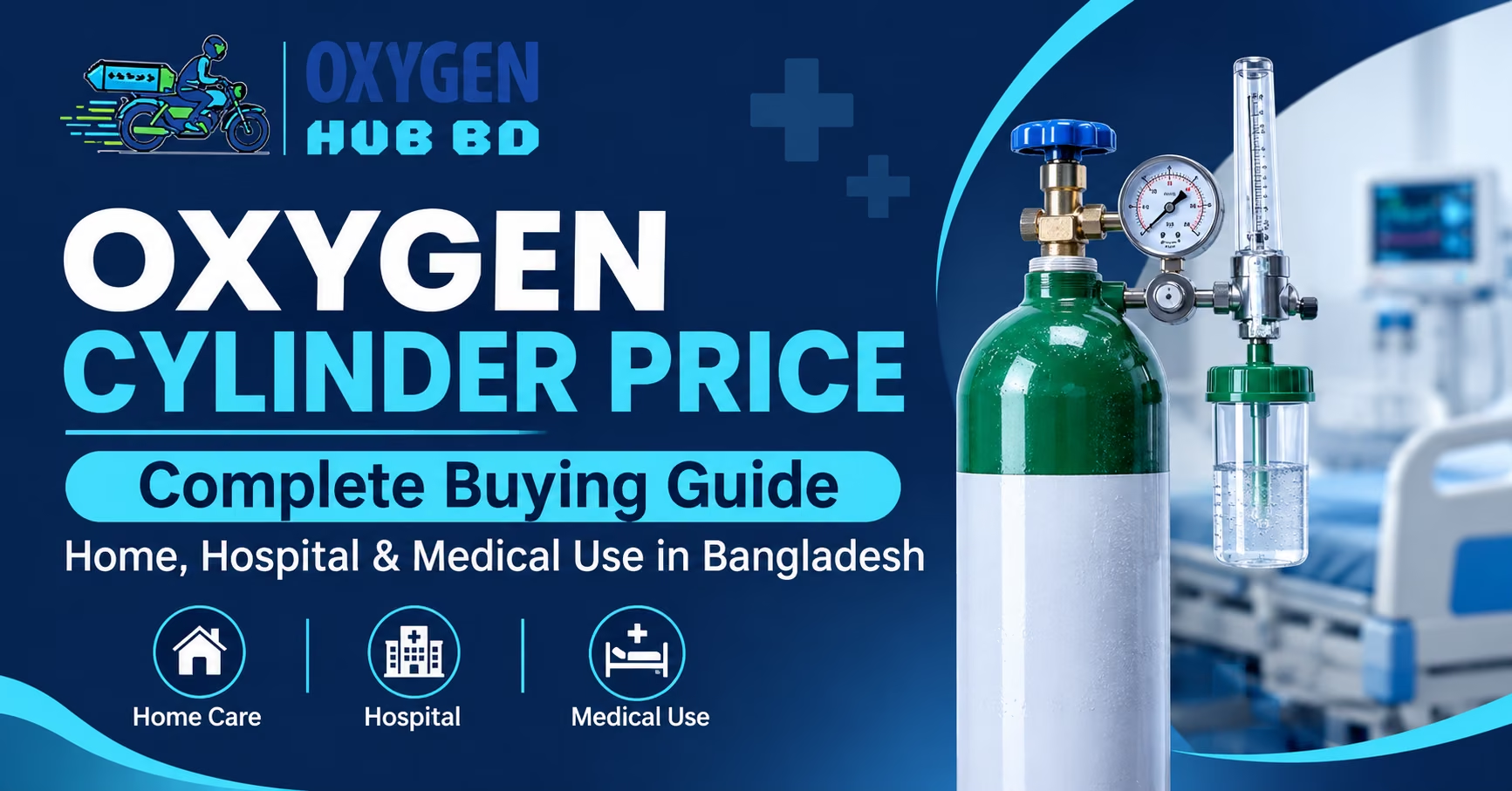
Oxygen Cylinder Price: Complete Buying Guide for Home, Hospital & Medical Use in Bangladesh
Oxygen Cylinder Price: Complete Buying Guide for Home, Hospital & Medical Use in Bangladesh
Oxygen Cylinder Price: Complete Buying Guide for Home, Hospital & Medical Use in Bangladesh
Choosing the right oxygen cylinder is an important decision when a patient needs breathing support at home, in a hospital, or during an emergency. But before purchasing one, most people have the same questions: How much does it cost? Which size is suitable? Should you buy a small portable cylinder or a larger one? What accessories do you need? Understanding the oxygen cylinder price is not just about finding the cheapest product. You also need to consider the cylinder’s capacity, oxygen quality, material, pressure rating, regulator, refill availability, and safety features.
In Bangladesh, several types of medical oxygen cylinders are available, including small portable models, standard home-care cylinders, and larger cylinders for hospitals and medical facilities. Prices vary depending on the brand, capacity, and accessories included in the package. This complete buying guide explains everything you should know before purchasing an oxygen cylinder. Whether you need one for a family member, a medical facility, an ambulance, or emergency backup, this guide will help you make a more informed decision.
What Is the Oxygen Cylinder Price in Bangladesh?
The oxygen cylinder price in Bangladesh generally depends on the cylinder’s size, brand, material, capacity, and included accessories. A small portable model may cost less than a larger medical cylinder, while premium brands and complete packages may cost more. Based on the product listings available from Oxygen Hub BD, the following prices provide a useful starting point for comparing options.
Oxygen Cylinder Price List in Bangladesh
| Oxygen Cylinder Type | Listed Price (BDT) | Suitable Use |
| 2000 LTR Oxygen Cylinder | ৳9,200 | Home and medical use |
| China Medical Oxygen Cylinder | ৳9,500 | Home care and backup |
| Islam Oxygen Cylinder | ৳9,500 | Medical and home use |
| Mini Oxygen Cylinder | ৳9,300–৳11,500 | Portable and emergency support |
| Linde Oxygen Cylinder | ৳16,000 | Medical and professional use |
| Oxygen Cylinder Trolley | ৳1,000 | Safe cylinder movement |
Important: These are listed prices found on Oxygen Hub BD, not guaranteed live quotations. Product availability, accessories, delivery fees, and specifications can change. Contact the supplier to confirm the latest price before ordering. You can explore the available products through the Oxygen Hub BD website. A product advertised at a lower price may not include a regulator, flowmeter, mask, or delivery. Always compare the complete package rather than looking at the cylinder price alone.
What Factors Affect the Cost of an Oxygen Cylinder?
Several factors influence how much you need to spend when purchasing an oxygen cylinder. Understanding these factors can help you choose a suitable product without paying for unnecessary features.
1. Cylinder Capacity
Capacity is one of the biggest factors affecting the cost. Larger cylinders generally hold more compressed oxygen and may provide a longer supply, depending on their working pressure and the patient’s prescribed oxygen flow. For example, a small portable cylinder may be convenient for short journeys, while a larger model may be more suitable for a home-care setup.
2. Cylinder Material
Most medical oxygen cylinders are made from steel or aluminium.
| Feature | Steel Cylinder | Aluminium Cylinder |
| Weight | Generally heavier | Generally lighter |
| Durability | Strong construction | Durable when properly maintained |
| Portability | May need a trolley | Easier to move in many cases |
| Price | Often more affordable | May cost more |
| Best for | Stationary use and regular setups | Situations where lower weight matters |
Both materials can be suitable when the cylinder is properly manufactured, tested, and approved for its intended use.
3. Brand and Manufacturing Quality
Brand reputation can affect the purchase cost. A reliable manufacturer should provide proper product identification, specifications, safety information, and inspection records. Before purchasing a new cylinder, ask about its manufacturer, working pressure, certification, and after-sales support.
4. Regulator and Accessories
Some suppliers sell only the cylinder, while others provide a complete package.
The total cost may include:
- Pressure regulator
- Pressure gauge
- Oxygen flowmeter
- Humidifier bottle, where appropriate
- Oxygen mask
- Nasal cannula
- Oxygen tubing
- Cylinder trolley or stand
Always request an itemised quotation so you know exactly what you are paying for.
5. Delivery and Refill Services
Delivery charges may vary depending on your location. Refill services, cylinder exchange, and emergency delivery can also affect the total expense.
A supplier with dependable refill support can be more valuable than one offering a slightly cheaper cylinder without convenient after-sales service.
Which Oxygen Cylinder Sizes Are Available?
Oxygen cylinders come in different physical sizes and gas capacities. The right option depends on the patient’s medical requirements, expected usage, and whether the equipment needs to be moved regularly. Before comparing the oxygen cylinder price, it is important to understand the available sizes and their actual gas capacity. One important detail: a cylinder labelled 5 litre or 10 litre may refer to its internal water capacity, not the total volume of compressed oxygen available for breathing. This difference can also affect the oxygen cylinder price and the amount of oxygen you receive. Always check the manufacturer’s actual gas-capacity specifications before purchasing.
1. Small and Mini Oxygen Cylinders
Small oxygen cylinders are designed for situations where portability is important. They may be useful for short patient transfers, travel between medical facilities, or emergency backup when recommended by a healthcare professional. Some models are marketed as pocket-sized or mini cylinders. However, a small physical size does not automatically mean the cylinder can provide oxygen for a long period.
Before purchasing, check:
- Total cylinder weight
- Actual oxygen capacity
- Working pressure
- Regulator compatibility
- Expected operating time
- Refill availability
A portable model should be selected according to the patient’s needs, not simply because it is easier to carry.
2. 5 Litre Oxygen Cylinders
A 5 litre oxygen cylinder can be considered for certain home-care and smaller medical setups. However, you should confirm whether the stated 5 litre measurement represents water capacity or another specification. The usable oxygen supply depends on the internal volume and pressure rating. Ask the supplier for the actual gas capacity in litres or cubic metres before making a purchase.
3. 10 Litre Oxygen Cylinders
A 10 litre model may provide a greater oxygen supply than a smaller cylinder with similar working specifications. It may be considered for home care, clinics, and medical facilities when its capacity matches the patient’s prescribed requirements. Do not assume that every 10 litre cylinder will last for the same number of hours. Working pressure, usable gas volume, and oxygen flow all affect its operating time.
4. 20 Litre Oxygen Cylinders
A 20 litre cylinder is a larger option that may be considered for professional medical settings or other suitable applications. Its larger physical size generally makes it less convenient to carry than a mini or portable model. Before buying, check the cylinder’s pressure rating, gas capacity, weight, valve type, and refill arrangements.
5. 40 Litre and 47 Litre Oxygen Cylinders
Larger cylinders, including 40 litre and 47 litre models, are commonly associated with industrial gas storage and certain specialised supply arrangements. However, physical capacity alone does not establish whether a cylinder is suitable for patient care. A medical oxygen cylinder must meet the appropriate medical gas and safety requirements. If you are considering a large cylinder for a hospital or medical facility, consult a qualified medical gas supplier.
Understanding Different Cylinder Measurements
You may also come across descriptions such as 1 litre, 2 litre, 2.5 litre, 5kg, 10kg, or 14kg. These measurements do not all describe the same thing.
| Measurement | What It May Refer To |
| 1 litre | Small cylinder’s stated internal capacity |
| 2 litre | Small-capacity cylinder specification |
| 5 litre | Water capacity or cylinder size |
| 10 litre | Water capacity or cylinder size |
| 20 litre | Larger cylinder’s water capacity |
| 40 litre | Large cylinder’s water capacity |
| 47 litre | Large industrial or specialised cylinder |
| 5kg | Product weight or a separate gas specification |
| 10kg | Product weight or a separate gas specification |
| 14kg | Product weight or a separate gas specification |
Never compare cylinders using only their litre or kilogram labels. Ask the supplier for the actual oxygen gas capacity and working pressure.
Which Oxygen Cylinder Is Best for Home Use?
The best cylinder for home use depends on the patient’s prescribed oxygen requirements, expected usage time, and available space. Before comparing the oxygen cylinder price, consider the cylinder’s capacity, safety features, and refill availability. For most households, a standard medical oxygen cylinder with compatible accessories can be a practical choice. A portable oxygen cylinder may also be useful for emergency backup or patient transportation. Choosing the right oxygen cylinder price and size ensures you get suitable equipment without unnecessary expenses.
Before choosing a cylinder, consider the following:
| Requirement | What to Consider |
| Patient’s condition | Follow the treating doctor’s recommendation |
| Oxygen flow | Confirm the prescribed litres per minute |
| Usage duration | Estimate the required gas supply |
| Available space | Choose a suitable storage location |
| Portability | Consider the weight and trolley requirements |
| Refilling | Check the supplier’s refill service |
| Safety | Confirm cylinder condition and accessories |
If a patient needs oxygen for extended periods, ask the doctor whether an oxygen concentrator may be a better option. An oxygen concentrator takes oxygen from surrounding air and concentrates it for delivery. Unlike a compressed oxygen cylinder, it does not need regular cylinder refilling, but it requires electricity and suitable maintenance. A backup oxygen source may still be necessary if the patient depends on oxygen and electricity becomes unavailable.
Oxygen Cylinder vs Oxygen Concentrator: Which Is Better?
Both devices can provide oxygen support, but they work differently. An oxygen cylinder stores compressed oxygen, while an oxygen concentrator separates and concentrates oxygen from the surrounding air.
| Feature | Oxygen Cylinder | Oxygen Concentrator |
| Working method | Stores compressed oxygen | Concentrates oxygen from air |
| Electricity | Usually not required for gas delivery | Requires electricity |
| Refill | Required when gas runs out | No routine cylinder refill |
| Portability | Depends on cylinder size | Depends on model |
| Supply duration | Limited by stored gas | Depends on power and equipment operation |
| Backup use | Useful as an emergency supply | May need a backup power or oxygen source |
| Maintenance | Inspection and refill | Filter and equipment maintenance |
An oxygen concentrator may be practical for some patients who need regular oxygen support at home. A cylinder may be more appropriate for transport, backup, or situations where a portable stored supply is required. The choice should always be based on medical advice, prescribed oxygen requirements, and equipment specifications.
What Is the Difference Between Medical and Industrial Oxygen Cylinders?
Medical oxygen and industrial oxygen should never be treated as interchangeable products. When comparing the oxygen cylinder price, always check whether the cylinder contains medical-grade oxygen and meets the required safety standards. Medical oxygen is supplied for patient care and must meet appropriate medical quality requirements. Industrial oxygen is intended for industrial applications, such as metal cutting and welding. Industrial gas cylinders may also have different valves, filling procedures, and inspection requirements. Therefore, before purchasing, compare the oxygen cylinder price along with gas quality, cylinder specifications, and intended use. Never use industrial oxygen as a substitute for medical oxygen.
| Feature | Medical Oxygen | Industrial Oxygen |
| Intended use | Patient care | Industrial applications |
| Quality requirements | Medical-grade specifications | Industrial specifications |
| Supply arrangements | Medical gas suppliers | Industrial gas suppliers |
| Equipment | Medical-compatible regulator and flowmeter | Application-specific equipment |
| Patient use | Only when medically prescribed | Not suitable as a substitute |
A welding cylinder must not be used for a patient’s breathing support. The same rule applies to cylinders intended for diving, swimming-related equipment, or other specialised gas applications. Even if two cylinders look similar, their contents and intended use may be different. Always check the gas label and manufacturer information. Never identify a cylinder by colour alone.
What Are the Main Parts of an Oxygen Cylinder?
Understanding the basic parts of a cylinder makes it easier to compare products and identify the accessories you need.
1. Cylinder Body
The main metal container stores compressed oxygen under pressure. It may be made from steel or aluminium, depending on the model.
2. Cylinder Valve
The valve controls the release of oxygen from the cylinder. It must be compatible with the regulator and should never be modified by an unqualified person.
3. Pressure Regulator
A regulator reduces the high pressure inside the cylinder to a suitable outlet pressure for the connected equipment.
4. Pressure Gauge
The gauge displays the pressure remaining inside the cylinder. It helps the user understand when the oxygen supply is getting low.
5. Oxygen Flowmeter
An oxygen flowmeter indicates or controls the amount of oxygen delivered per minute, depending on the design. The prescribed oxygen flow may be measured in LPM, meaning litres per minute.
6. Humidifier Bottle
Some oxygen delivery setups use a humidifier bottle to add moisture to the supplied gas. Whether it is needed depends on the equipment and clinical instructions.
7. Oxygen Mask or Nasal Cannula
These accessories deliver oxygen to the patient through the appropriate interface. Always use compatible, clean equipment and follow professional instructions.
How Long Does an Oxygen Cylinder Last?
The operating time depends on how much usable oxygen is inside the cylinder and the prescribed oxygen flow rate. A larger cylinder generally provides a longer supply than a smaller one, but the exact duration must be calculated from the manufacturer’s specifications.
A simple estimation formula is:
Operating Time (Minutes) = Usable Oxygen (Litres) ÷ Oxygen Flow (Litres per Minute)
For example, if a cylinder contains 1,800 litres of usable oxygen and the prescribed flow is 2 litres per minute:
1,800 ÷ 2 = 900 minutes, or approximately 15 hours.
Example of Oxygen Cylinder Running Time
| Usable Oxygen | Flow Rate | Estimated Duration |
| 500 litres | 1 LPM | 8 hours 20 minutes |
| 1,000 litres | 2 LPM | 8 hours 20 minutes |
| 1,800 litres | 2 LPM | 15 hours |
| 2,000 litres | 4 LPM | 8 hours 20 minutes |
| 2,000 litres | 5 LPM | 6 hours 40 minutes |
These are mathematical examples, not guaranteed operating times. Actual duration may be shorter because of the minimum usable pressure, equipment requirements, and possible leakage. Never increase or decrease the patient’s oxygen flow without medical advice.
What Should You Check Before Buying a New Oxygen Cylinder?
Buying a new cylinder requires more than comparing advertisements. You should confirm the product’s specifications and safety condition before making payment.
Use this checklist:
| Buying Checklist | Why It Matters |
| Medical-grade identification | Confirms intended use |
| Manufacturer information | Helps verify product origin |
| Working pressure | Determines operating specifications |
| Actual gas capacity | Helps estimate supply duration |
| Inspection status | Confirms applicable safety checks |
| Valve compatibility | Prevents connection problems |
| Regulator and flowmeter | Supports controlled oxygen delivery |
| Accessories | Avoids unexpected additional costs |
| Refill availability | Supports continued use |
| Delivery and warranty | Clarifies supplier support |
Should You Buy an Empty or Filled Cylinder?
Some sellers offer an empty cylinder, while others provide a complete package with oxygen gas. An empty cylinder may appear less expensive, but you must consider the additional cost of filling it and obtaining compatible accessories.
Before ordering, ask:
- Is the cylinder supplied with medical oxygen?
- Is the regulator included?
- Is the flowmeter included?
- Are the mask and tubing included?
- Is delivery available?
- How much does a refill cost?
An itemised quotation will help you compare different suppliers fairly.
Should You Buy or Rent an Oxygen Cylinder?
Buying and renting both have advantages. The right option depends on how long the patient is expected to need oxygen support.
| Factor | Buying | Renting |
| Initial cost | Usually higher | Usually lower |
| Short-term recovery | May be expensive | Often practical |
| Long-term use | May offer better value | Repeated rental charges add up |
| Maintenance | Owner arranges servicing | Depends on rental terms |
| Refill | Usually paid separately | May be separate or included |
| Ownership | Cylinder belongs to you | Cylinder must be returned |
For example, a family may prefer renting equipment during a short recovery period after hospital discharge. Buying may make more sense when a cylinder is expected to be needed repeatedly over a longer period. Oxygen Hub BD provides buying and rental information. You can review its oxygen cylinder rental options and contact the supplier to confirm current packages, deposits, and refill arrangements.
How Much Does Oxygen Cylinder Refilling Cost?
Refilling is an important part of the overall ownership cost. The charge may depend on the cylinder’s capacity, supplier, medical gas quality, location, and whether collection or home delivery is included.
Before arranging a refill, confirm:
- Whether the gas is medical-grade oxygen.
- Whether the cylinder is approved for medical oxygen.
- Whether the cylinder is within its required inspection period.
- Whether the supplier will refill or exchange the cylinder.
- Whether delivery and collection charges are included.
- Whether your existing regulator will remain compatible.
Never attempt to refill a cylinder yourself. Use a qualified supplier with suitable filling equipment and safety procedures.
How to Use an Oxygen Cylinder Safely at Home
Oxygen can support patients who need respiratory assistance, but it must be handled carefully. When choosing an oxygen cylinder price and model, safety features and proper handling instructions should always be considered. Oxygen is not itself a flammable gas. However, it supports combustion and can cause materials to burn more quickly and intensely. Therefore, every oxygen cylinder price comparison should also consider cylinder quality, valve condition, and safety standards.
The World Health Organization (WHO) provides important guidance on the safe handling, storage, and transportation of oxygen cylinders.
Follow these important precautions:
1. Keep the Cylinder Upright
Place the cylinder in an appropriate stand or secure it with a suitable strap or chain. Never leave it where it can easily fall.
2. Keep It Away from Fire
Do not smoke near oxygen equipment. Keep the cylinder away from candles, gas stoves, open flames, and other ignition sources.
3. Avoid Oil and Grease
Never apply oil, grease, petroleum jelly, or unsuitable lubricants to the cylinder valve, regulator, or fittings.
4. Use Compatible Accessories
Only use a regulator and flowmeter that are designed for the specific cylinder valve.
Never force a connection or modify equipment.
5. Store It in a Ventilated Area
Keep the cylinder in a clean, ventilated location and protect it from excessive heat.
6. Check for Damage and Leaks
Do not use a cylinder with a damaged valve, suspected leak, or uncertain safety condition.
Never use a flame to check for a gas leak. Contact the supplier or a qualified technician if you suspect a problem.
7. Keep Full and Empty Cylinders Separate
Clearly identify full and empty cylinders to avoid accidental use or confusion.
8. Follow the Prescribed Oxygen Flow
A patient should receive oxygen at the flow rate prescribed by a qualified healthcare professional. Do not change the setting based on guesswork. For additional guidance, read the World Health Organization’s Oxygen Cylinder Safety recommendations.
Where Can You Buy an Oxygen Cylinder in Bangladesh?
You can purchase medical oxygen cylinders through specialised medical equipment suppliers. Before choosing a supplier, check product availability, medical-grade identification, accessories, delivery services, refill arrangements, and after-sales support. Oxygen Hub BD offers oxygen cylinders and related medical equipment for customers in Bangladesh.
You can explore its website to compare available products and services:
- Oxygen cylinders: Browse different cylinder options and specifications.
- Portable oxygen cylinders: Compare smaller models for suitable transport and backup requirements.
- Oxygen accessories: Check regulators, flowmeters, and other compatible equipment.
- Cylinder rental: Ask about temporary equipment arrangements.
- Refill support: Confirm refill availability and delivery terms.
Visit Oxygen Hub BD to explore the available options. For product-specific information, see the 2000 LTR oxygen cylinder buying information and contact the supplier to confirm the exact model and current availability. If you are purchasing for a patient at home, make sure the equipment is medically appropriate and that a qualified professional explains how to use it.
Conclusion: How to Choose the Right Oxygen Cylinder
Choosing the right cylinder involves more than comparing different product listings. You need to consider the patient’s medical requirements, actual oxygen capacity, working pressure, material, regulator compatibility, refill availability, and safety features. The oxygen cylinder price in Bangladesh varies according to the brand, size, specifications, and accessories included. Smaller portable models may suit short-term transport or backup needs, while larger cylinders may be appropriate for selected home-care and professional medical setups.
Before purchasing, compare the complete package and ask for an itemised quotation. Make sure the cylinder is intended for medical oxygen and that the supplier can provide suitable refilling and support services. If you are looking for a suitable oxygen cylinder for home care, a hospital, or emergency backup, explore the available options at Oxygen Hub BD. Visit Oxygen Hub BD or contact its team to check the latest product availability, pricing, delivery, rental, and refill options. Choose safe, suitable equipment and always follow your healthcare professional’s instructions.
Frequently Asked Questions (FAQs)
1. What is the oxygen cylinder price in Bangladesh?
Prices vary depending on brand, capacity, material, and accessories. Oxygen Hub BD lists selected models from approximately ৳9,200, but you should contact the supplier for the latest quotation.
2. What is the price of a 5-litre oxygen cylinder?
The cost depends on the model, working pressure, material, and included accessories. Ask the supplier for the actual gas capacity because 5 litres may refer to water capacity.
3. How much does a 10-litre oxygen cylinder cost?
There is no single fixed price for every 10-litre model. Compare the working pressure, usable gas capacity, brand, and accessories before purchasing.
4. Can I use an oxygen cylinder at home?
Yes, when oxygen therapy is prescribed and the equipment is suitable for home use. Follow the doctor’s instructions and the supplier’s safety guidance.
5. How long does a full oxygen cylinder last?
Its duration depends on usable oxygen capacity and the prescribed flow rate. A qualified supplier can estimate the running time using the cylinder’s specifications.
6. Is a portable oxygen cylinder suitable for emergencies?
A portable cylinder may be useful for suitable emergency backup or patient transport. Its capacity and operating time must match the patient’s requirements.
7. Is an oxygen concentrator better than a cylinder?
It depends on the patient’s condition and usage requirements. A concentrator provides a continuous oxygen supply while powered, whereas a cylinder stores a limited amount of compressed oxygen.
8. Can I use an industrial oxygen cylinder for medical purposes?
No. Industrial and medical oxygen are not interchangeable. Always use appropriately identified medical oxygen equipment for patient care.
9. Should I buy or rent an oxygen cylinder?
Renting may be more practical for short-term needs, while buying may suit repeated long-term use. Compare the rental period, purchase cost, refills, and maintenance terms.
10. What accessories are required for an oxygen cylinder?
Depending on the setup, you may need a compatible regulator, pressure gauge, flowmeter, humidifier bottle, oxygen tubing, mask or nasal cannula, and a suitable stand or trolley.